
The majority of the time you spend interacting with a digital assistant like chatt gtp is actually wasted trying to fix its misunderstandings. When you need fast, reliable help, staring at a blank chat interface is incredibly inefficient. Categorized assistant apps solve this exact problem by replacing open-ended prompt boxes with pre-configured experts—like a chef, language tutor, or writing guide—giving you accurate answers immediately without requiring you to write perfect instructions.
The blank text box fails everyday users
For the past six years, my work in digital literacy and online wellbeing has focused on how people interact with emerging technology. I have observed a significant gap between the tools developers build and how human beings actually think. According to Pew Research Center data from June 2024, 34% of U.S. adults now use these tools, including 58% of adults under 30. We are adopting this technology rapidly. Yet, a global workplace survey highlighted a frustrating paradox: while users report efficiency improvements, 44% of them regularly spend their time fixing the assistant's mistakes.
Why does this happen? Because the standard chatt gtp experience secretly requires you to be a prompt engineer. You have to write a flawless, highly detailed prompt to get a useful answer. If you just type a quick question, the system guesses your intent, often getting it wrong. I see this constantly when evaluating tools for families and students. People urgently open their phones, type variations like chatgtp or chat gptt, and expect an immediate solution to a homework problem or a recipe substitution. Instead, they get a generic response that they then have to manually correct.
Pre-trained experts reduce cognitive load
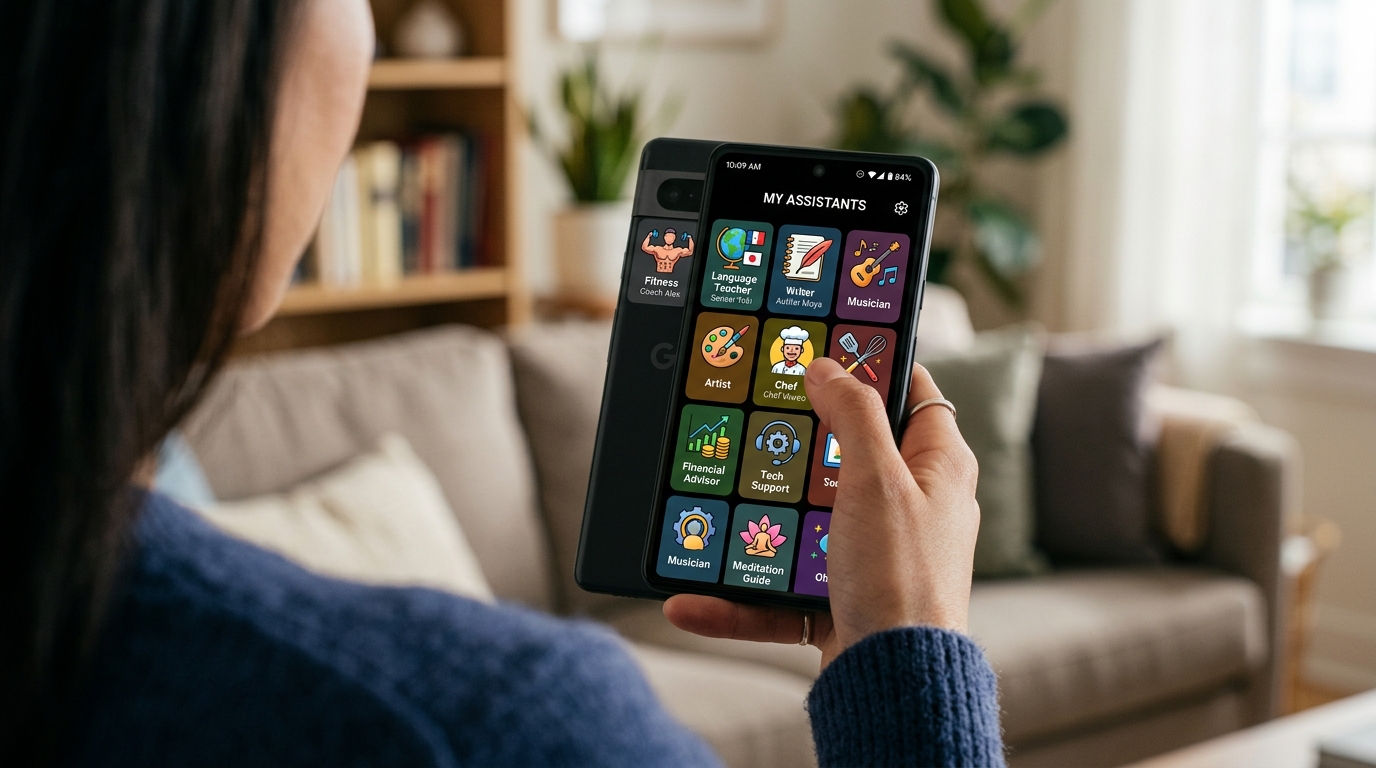
This widespread friction is why the architectural approach of Kai AI - Chatbot & Assistant makes so much practical sense. Rather than forcing the user to explain exactly how they want the information delivered, the app categorizes its services. It offers a structured library of pre-defined personas. If you want to plan a week of healthy family dinners, you do not use a generic chat box; you select the Chef assistant. If you need to practice Spanish, you choose the Language Teacher.
Each of these categorized personas is configured in the background with a highly specific, expert-level instruction set. The user never sees the complex prompt; they just get the benefit of it. The mental burden of establishing context should belong to the software, not the person using it.
This represents a major improvement in usability. In international markets, we see the exact same user intent reflected in search behaviors. Whether a user is looking for an English interface or searching for an AI-supported chatbot, the demand is identical. People want an app that acts as a categorized assistant, rather than a blank canvas. This is precisely what the Kai AI app provides—a system designed to deliver specialized expertise without the guesswork.
Accuracy matters most when conversations get personal
The stakes of an unstructured chatt gtp search are higher than just wasted time. Academic research published in 2024 found that 82% of users describe their conversations with these systems as sensitive. People frequently discuss their health, their personal finances, and their private family decisions with these platforms. In fact, industry data shows that 70% of interactions are not work-related.
As someone deeply invested in online safety, that 82% statistic is alarming if the system lacks proper guardrails. An open-ended search using terms like chatgps or chat gptt can result in unreliable advice because the system lacks specialized context. By confining the interaction to a specific, pre-trained expert persona, the boundaries of the conversation become much safer. A designated Fitness Coach persona, for example, is constrained by its underlying instructions to only provide fitness-related guidance, reducing the risk of it providing off-topic or harmful advice.

Structured design dictates who benefits most
When evaluating digital tools for daily life, clarity of audience is crucial. The categorized approach used by Kai AI is built specifically for students managing research workloads, freelancers who need quick drafting assistance, and parents trying to organize their schedules. If you want fast, accurate, task-specific help, a categorized assistant is designed for that outcome.
Conversely, it is important to state who this format is not for. If you are a software developer looking to generate complex Python scripts, or an AI researcher who wants to build your own custom models, a categorized app will feel too constrained. You need an open developer environment, not a consumer assistant.
In practice researching safety and usability at ParentalPro Apps, the most effective tools are those that limit friction while maximizing safety. The era of typing perfectly formatted instructions into a blank box is ending. We no longer need to learn how to talk to machines; the software has finally been structured to talk to us in the specific, expert voices we actually need.