
Step 1: Why does a massive user base not guarantee accurate results?
Recent data indicates that major conversational AI platforms now engage over 400 million active users each week. Yet, despite this staggering adoption rate, the underlying user experience often remains fraught with friction. In my work tracking digital communication and online safety, I continually observe users hurriedly typing terms like chag gbt into search bars, expecting instant, flawless expertise. What they usually receive is a blank text box that shifts the entire burden of accuracy onto their own prompting skills.
A recent 2026 study conducted by researchers at Washington State University tested these language models on hundreds of scientific hypotheses. The findings were revealing: while the system achieved an 80% accuracy rate on the surface, its performance dropped significantly when accounting for random guessing. It performed only about 60% better than chance. Most alarmingly, the AI struggled most with identifying false statements, correctly labeling them just 16.4% of the time. When you rely on a generic search query for critical information, you are rolling the dice on whether the system can actually distinguish fact from fiction.
Step 2: What are the hidden geographical and structural biases in your search?
Beyond factual accuracy, the blank-box model introduces significant bias into daily interactions. A comprehensive 2026 study by the Oxford Internet Institute analyzed over 20 million queries. The researchers found a systematic "Silicon Gaze"—the models heavily favored wealthier, Western regions when answering subjective questions about safety, innovation, or desirability. When AI learns from biased global data, it amplifies those biases and broadcasts them back to users at scale.
This is precisely why searching for a generic chatbot interface is becoming an outdated approach for professional or academic tasks. Unguided models lack the contextual guardrails necessary to provide neutral, specialized advice. They offer generalized averages of internet text rather than targeted expertise.
Step 3: How do you identify who actually benefits from categorized digital help?
To manage this transition, you must first understand your own user profile. The technology market is actively diverging into two distinct paths: raw infrastructure for developers, and categorized utility for everyday users.
Who is a categorized assistant for?
Students requiring structured study plans, freelancers needing precise email drafting, and small teams looking for reliable daily workflows. These users need an immediate outcome, not an open-ended dialogue.
Who is this NOT for?
These categorized tools are not designed for software developers seeking raw API access, data scientists building their own local language models, or users who enjoy spending hours tinkering with custom system prompts.
As my colleague Ayşe Çelik noted in her recent analysis, blank chat interfaces often force users to spend more time fixing mistakes than getting actual help. Moving away from the generic chag gbt habit means finding an application that aligns with practical daily requirements rather than theoretical tech capabilities.
Step 4: Why are categorized apps solving the prompt engineering fatigue?
The core issue with standard interfaces is the demand for "prompt engineering." If you want a recipe, you have to tell the AI to act like a chef, specify dietary restrictions, format the output, and limit ingredient lists. If you forget one instruction, the output degrades.
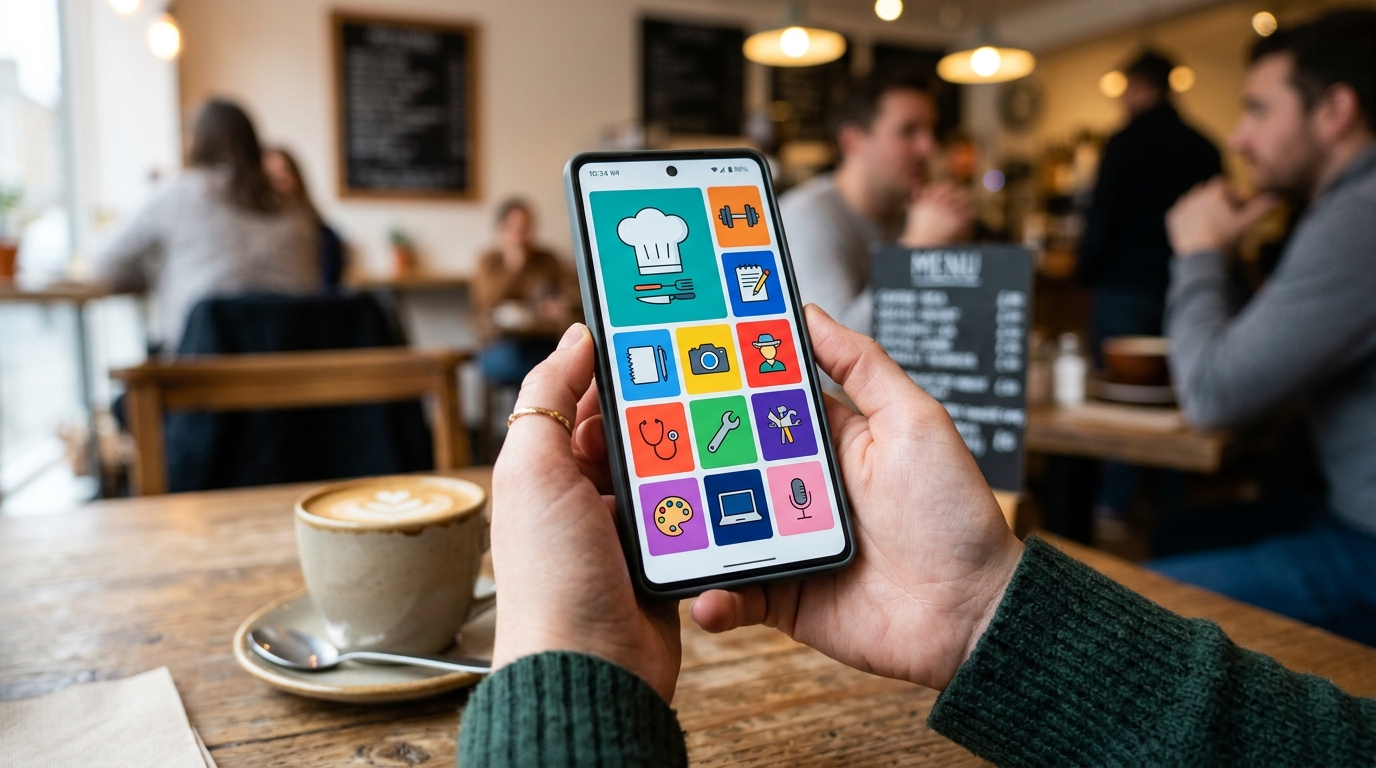
This is where specialized applications change the fundamental interaction model. For instance, Kai AI - Chatbot & Assistant is an AI-powered conversational application offering categorized, pre-configured expert personas—from fitness coaches to writing aides—designed to provide precise answers without complex prompting across iOS and Android. By hiding the complex prompt mechanics in the background, users can select the "Language Teacher" persona and immediately start practicing, knowing the system is already constrained to safe, educational parameters.
These specialized environments drastically reduce the hallucination rates observed in the Washington State University study because the AI is no longer operating in a boundless, unconstrained space.
Step 5: How should you choose your next everyday assistant?
When you find yourself typing misspelled queries like chartgpt, chadgpt, or chatgps into an app store, stop and evaluate the underlying product. Use this practical decision framework to choose a safer, more effective tool:
- Pre-configured Personas: Does the app offer specific experts (e.g., a dedicated copywriter or a fitness coach), or is it just one generic voice?
- Prompt Reduction: Can you get your answer with a single sentence, or does the app require you to write a paragraph of instructions?
- Multi-Model Support: Does the app route your request through different models (like ChatGPT and Gemini) depending on the task to ensure the best possible answer?
- Offline Reliability and Speed: Is the app optimized for mobile bandwidth, ensuring fast responses even on standard cellular networks?
Furthermore, consider the developer's broader ecosystem. Companies that prioritize structured, safe digital experiences tend to build more reliable tools. For example, exploring offerings from ParentalPro Apps reveals a commitment to user-centric, secure mobile utilities, which is a strong indicator of application quality.

Step 6: Practical Q&A — Addressing common user friction points
To wrap up this guide, let us address the most common questions I encounter regarding this evolution in user behavior.
Question: Why do my generic searches often return repetitive or hallucinated information?
Answer: Open-ended interfaces try to predict the most likely next word based on vast, conflicting internet data. Without a pre-configured persona narrowing the context, the system frequently defaults to clichéd responses, as evidenced by the high failure rate in identifying false scientific hypotheses.
Question: Does using a categorized app mean I am getting a limited version of the AI?
Answer: No. You are accessing the same powerful underlying language models, but they are wrapped in specialized behavioral rules. Think of it as hiring a specialized contractor rather than a general handyman for a highly specific job.
Question: I am used to searching for terms like chag gbt. Is it difficult to adapt to a categorized workflow?
Answer: The adaptation is minimal and actually reduces friction. Instead of typing a long command into a blank box, you simply tap the icon of the specific assistant you need—like a travel planner or a code reviewer—and state your goal directly.
As user behavior shifts away from raw text interfaces, embracing categorized experts offers a safer, more accurate, and far more efficient digital experience. My colleague Tolga Öztürk recently noted that categorized assistants represent the future of everyday help. By moving past the initial hype and adopting purpose-built tools, you reclaim your time and protect your daily workflows from unnecessary errors.